
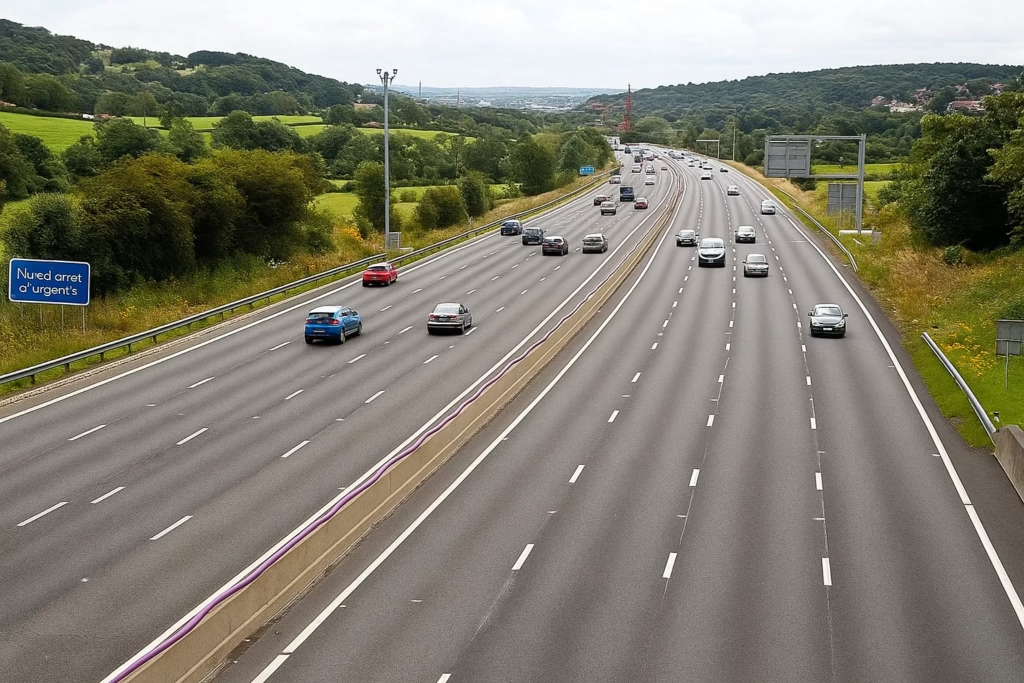
Driving on motorways in Europe can feel exciting, especially if you’re new to long-distance driving or visiting from another country. Motorways (also called highways, freeways, or autobahns depending on the country) are fast roads built for smooth travel between cities, regions, and even countries. They are designed to make journeys quicker and safer by separating high-speed traffic from local roads, pedestrians, and cyclists.
Understanding Motorways
Motorways in Europe are usually marked with a blue road sign featuring a white road symbol (though the style may differ slightly between countries). They are controlled-access roads, meaning you can only enter and exit through specific slip roads or junctions.
No pedestrians, cyclists, mopeds, or farm vehicles are allowed.
Motorways are designed for fast, continuous travel.
Most motorways in Western Europe are in excellent condition, while some in Eastern Europe may be simpler but still functional.
Different countries also have slightly different names:
Germany – Autobahn
France, Spain, Italy – Autoroute / Autostrada / Autopista
UK & Ireland – Motorway (M1, M25, etc.)
Netherlands & Belgium – Autosnelweg
Poland – Autostrada
Speed Limits
Speed limits are one of the first things you should check before driving.
Germany: Famous for its Autobahn, parts of it have no general speed limit. However, a recommended speed (Richtgeschwindigkeit) of 130 km/h exists, and some stretches do have posted limits (especially near cities, junctions, or construction).
France, Spain, Italy, Poland, Netherlands: Usually 120–130 km/h (about 75–80 mph).
UK & Ireland: 70 mph (113 km/h).
Norway & Sweden: Slower, usually 100–110 km/h.
Always watch for speed signs, because temporary limits (for roadworks, weather, or safety zones) are common. Speed cameras are widely used in Europe, so it’s better to stay within the limit than risk a fine.
Lane Discipline
One of the most important motorway rules in Europe is lane discipline.
In almost every European country, the rule is: Keep to the right (or left in the UK & Ireland) unless overtaking.
The middle or left lane is not a “cruising lane.” You should only move there to overtake slower traffic, then return to the right.
Tailgating or “flashing lights” to push another car out of the lane is considered rude and sometimes illegal.
This simple rule keeps traffic flowing smoothly and avoids unnecessary road rage.
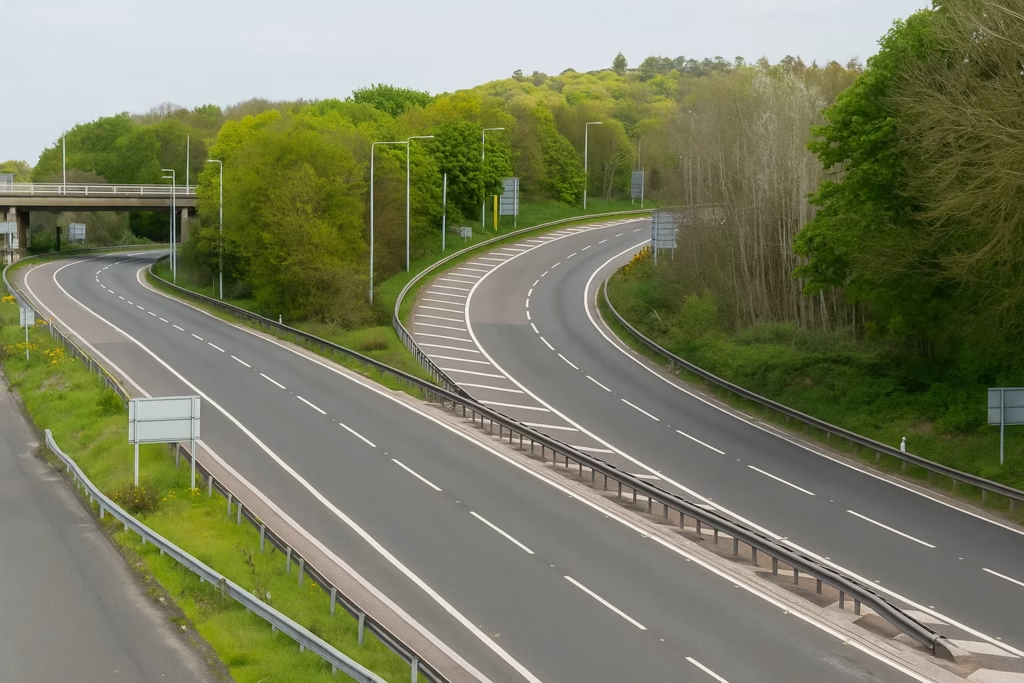
Joining and Leaving the Motorway
Motorways are entered and exited using slip roads (ramps).
When joining, use the slip road to build up speed before merging. Don’t slow down — match the flow of motorway traffic.
Vehicles already on the motorway have priority. You must find a safe gap before merging.
When leaving, move into the exit lane early and reduce speed only after you leave the motorway. Braking on the motorway itself can be dangerous.
Emergency Rules
If something goes wrong:
Hard shoulder: This is the emergency stopping lane, not a driving lane. Use it only for breakdowns or emergencies.
Emergency phones: Many European motorways have orange emergency phones placed every 2 km. Use them if your phone doesn’t work.
Warning triangle & vest: Most European countries legally require you to carry a reflective vest and a warning triangle. Place the triangle about 50–100 meters behind your car if you break down.
Top Tips for Driving on Motorways
1. Merge Smoothly
Use the slip road to accelerate and match the speed of motorway traffic. Check mirrors and blind spots, signal early, and merge without stopping unless traffic forces you to.
2. Keep Left Unless Overtaking
In Europe, the left lane is for normal driving, and middle/right lanes are for overtaking. Move back to the left once it’s safe after passing another vehicle.
3. Maintain Safe Following Distance
Use the two-second rule in normal conditions. Increase it in rain, fog, or heavy traffic to give yourself enough reaction time.
5. Watch Your Speed
Motorway limits typically range from 100–130 km/h, depending on the country. Adjust for weather, road conditions, and traffic density.
Driving on Europe’s motorways can be one of the most enjoyable experiences for a driver. Imagine cruising smoothly across borders — from France into Spain, or from Germany into Austria — with beautiful scenery on both sides. But remember: high speed also means high responsibility.
By following the rules, respecting local customs, and staying alert, you can make your motorway journey safe, smooth, and enjoyable.
Whether you’re planning a holiday road trip, commuting for work, or just exploring the open road, these motorway rules will help you drive with confidence across Europe.
FAQ
Q1: Who can drive on a motorway in Europe?
Drivers must have a valid driving license for the vehicle type. Learners may drive on motorways only if accompanied by an instructor where allowed.
Q2: Which lane should I use?
Left lane: normal driving.
Middle/right lanes: overtaking only. Always return to the left lane after passing.
Q3: What is the recommended following distance?
Use the two-second rule in good weather. Increase to four seconds in rain, fog, or heavy traffic.
Q4: What should I do if I miss my exit?
Never stop or reverse. Continue to the next exit and leave safely.
Discover more from SMOOTHSTEERING
Subscribe to get the latest posts sent to your email.
Pingback: Lane Discipline - Staying in the Right Lane at the Right Time