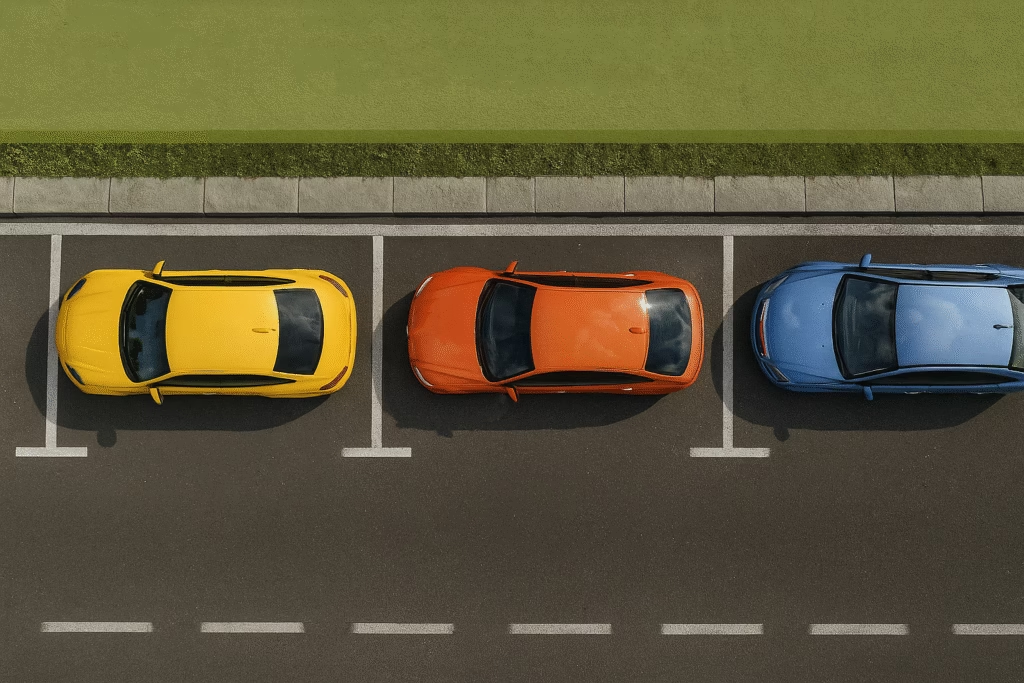
Parallel parking is one of the trickiest maneuvers for new drivers. In fact, many people find it more stressful than driving on a highway. But here’s the good news once you understand the steps and practice them a few times, parallel parking becomes second nature.
Why Learn Parallel Parking?
Real-life necessity: Not every parking lot has wide spaces. In cities, most spots are parallel.
Driving tests: Many countries include parallel parking in the road test.
Safety: Doing it wrong can damage your car or others around you.
Confidence: Once you master it, you’ll feel more comfortable driving anywhere.
Step-by-Step Guide to Parallel Parking
Here are the seven simple steps to park smoothly between two cars
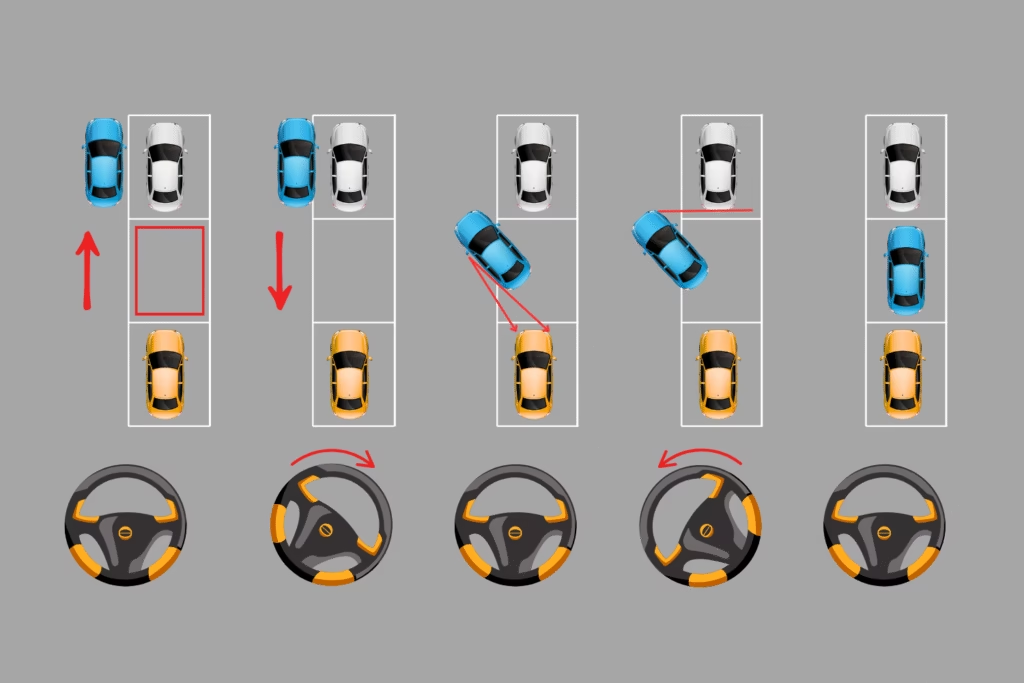
1. Find a Good Spot
Look for a parking space at least one and a half times the length of your car. Make sure the space is legal and safe (no fire hydrants, no-parking zones, or driveways).
2. Pull Up Beside the Car in Front
Stop your car parallel to the vehicle in front of the empty space. Keep about 2–3 feet of space between your car and theirs. Your rear bumpers should line up.
3. Start Reversing Slowly
Shift into reverse and turn your steering wheel sharply toward the curb. Move back slowly. Keep checking your mirrors and surroundings.
4. Straighten the Wheels
As soon as both headlights of the car behind are visible in your side mirror, straighten your steering wheel. Continue reversing straight back.
5. Reverse Until You Lined With the Car in Front
This is the “pivot point.” Once your car’s front bumper lines up with the rear bumper of the car in front, you’re ready for the next move.
6. Turn the Wheel Away From the Curb
Now, turn your steering wheel sharply away from the curb and continue reversing. Your car will angle neatly into the space.
7. Move Slightly Forward
Once your car is inside the space, make small adjustments by moving forward or backward. The goal is to be parallel to the curb and have an equal gap at the front and back.
Top Tips for Parallel Parking
1. Stay Calm and Take Your Time
Parallel parking can feel stressful, especially with traffic behind you but rushing only makes it harder. Take a deep breath, stay focused, and move slowly.
2. Practice Makes Perfect
The more you practice, the easier it gets. Try in quiet areas first before attempting busy streets. Repetition helps you develop a natural feel for your car’s size and turning radius.
3. Use Your Mirrors and Check Blind Spots
Mirrors give you a good view, but always turn your head to check blind spots. Relying only on cameras or mirrors can make you miss nearby obstacles or pedestrians.
4. Control Your Speed
The slower you go, the more control you have. Light pressure on the brake and gentle steering make your car easier to handle in tight spaces.
5. Use Parking Aids Wisely
Sensors and cameras are helpful, but don’t depend entirely on them. Use them to assist your judgment not replace it.
Common Mistakes to Avoid
Parking too close to the car in front before starting.
Forgetting to check blind spots and mirrors.
Reversing too quickly.
Not turning the wheel enough.
Stopping too far from the curb (should be about 6–12 inches away).
Parallel parking may seem scary at first, but it’s really just about timing, patience, and practice. Once you know the steps — find a good spot, line up correctly, turn the wheel at the right moments, and adjust.
Remember:
Go slow
Stay calm
Practice often
The more you practice, the more natural it will feel. Soon, you’ll be sliding into tight spaces without breaking a sweat. 🚗💨
FAQ
Q1: Why is parallel parking so hard for beginners?
It feels tricky because it requires precise steering, timing, and control in a tight space. With practice, it becomes much easier.
Q2: How much space do I need to parallel park?
Ideally, choose a space that’s about one and a half times the length of your car. Too tight, and you’ll struggle to maneuver safely.
Q3: Can I adjust if I don’t get it right the first time?
Yes! It’s completely fine to pull forward and straighten out. Small corrections are normal and show that you can handle the car carefully.
Q4: What if I touch the curb during the test?
Lightly touching the curb usually isn’t a fail, but mounting it or hitting it hard could be. Keep control and adjust if needed.
Q5: How can I improve my accuracy?
Practice using reference points (like mirrors or bumpers) and park in different settings to build confidence.
Discover more from SMOOTHSTEERING
Subscribe to get the latest posts sent to your email.