
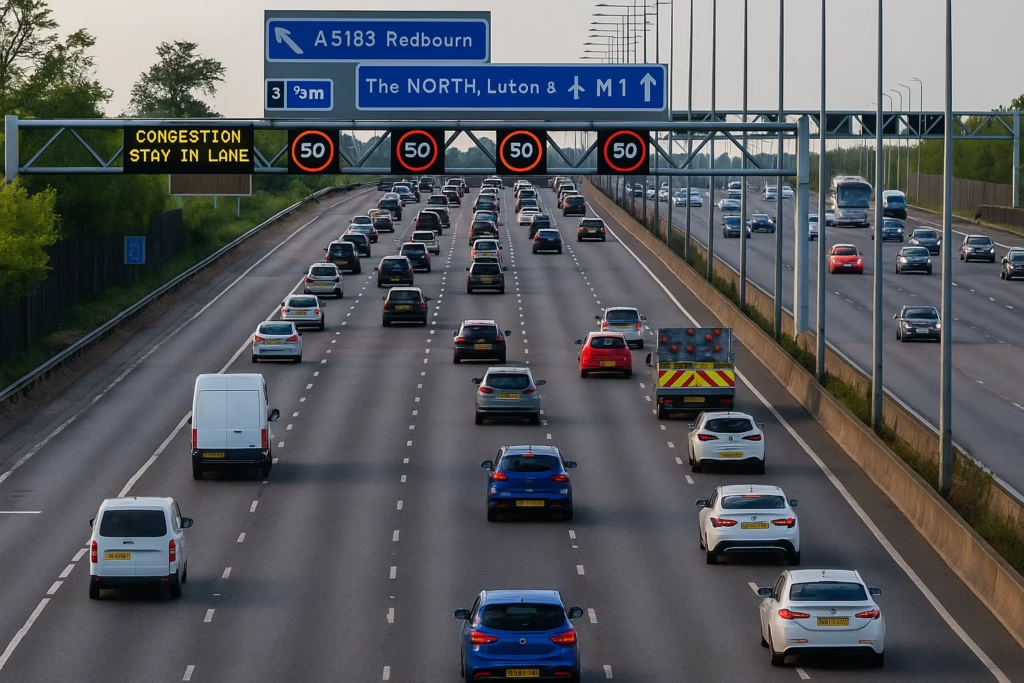
If you’re learning to drive or just starting to explore longer journeys, you’ve probably heard of dual carriageways and motorways. At first, they might look quite similar: two sides of traffic, central barriers, and cars moving quickly. But there are important differences between the two.
Understanding how they differ will not only help you drive more confidently but also keep you safe on the road. In this guide, I’ll break it down in simple English so you’ll never be confused again.
What is a Dual Carriageway?
A dual carriageway is a type of road with two separate lanes of traffic going in opposite directions. The two sides are divided by a physical barrier, fence, or central reservation.
Each side usually has two or more lanes, and vehicles can travel at higher speeds compared to smaller single-carriageway roads.
Key points about dual carriageways:
They can have roundabouts, traffic lights, or slip roads.
Speed limits are usually up to 70 mph (or 110 km/h in some countries).
They are common outside towns and cities, linking different areas together.
In short, dual carriageways are like a “fast road” that’s safer than single-lane roads because traffic flows in one direction on each side.
Understanding how they differ will not only help you drive more confidently but also keep you safe on the road. In this guide, I’ll break it down in simple English so you’ll never be confused again.
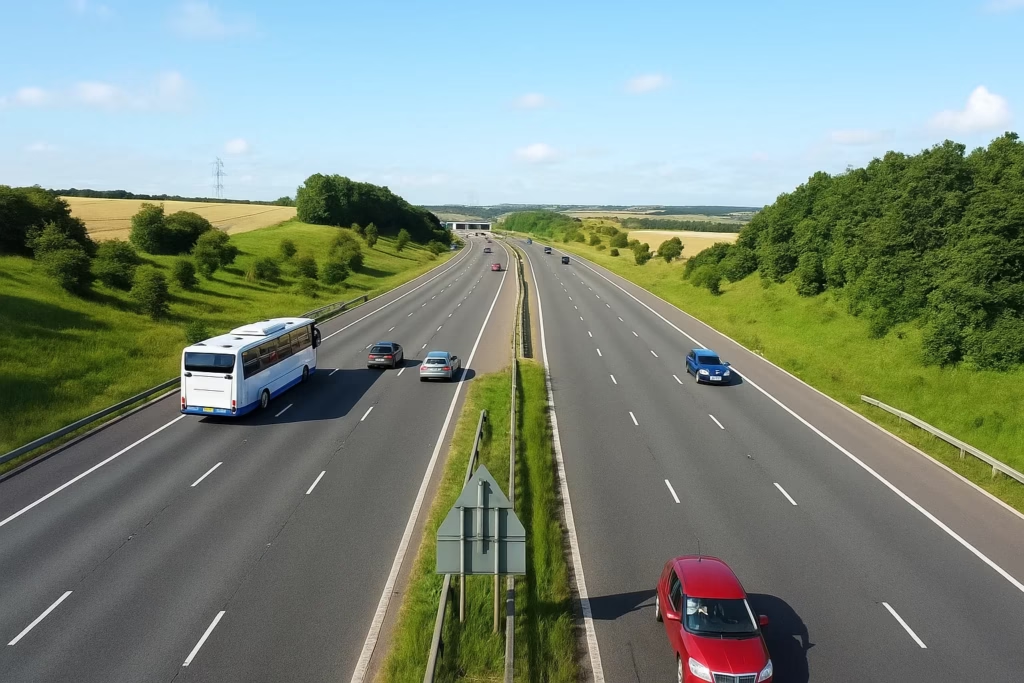
What is a Motorway?
A motorway is a high-speed road designed specifically for long-distance travel. Think of it as the safest and fastest type of road.
Unlike dual carriageways, motorways have stricter rules and usually three or more lanes on each side.
Key points about motorways:
They do not have traffic lights or roundabouts (except in very rare cases).
They only allow motorized vehicles — no pedestrians, cyclists, or slow vehicles.
They are built for continuous high-speed traffic, with slip roads (on-ramps and off-ramps) for entering and leaving.
Speed limit is usually the same as dual carriageways (70 mph), but conditions are safer and smoother.
In short: motorways are the “big highways” where traffic moves fast and steady without interruptions.
Key Differences
| Feature | Dual Carriageway | Motorway |
|---|---|---|
| Purpose | Connects towns, cities, or regions | Long-distance, high-speed travel across the country |
| Lanes | Usually 2–3 each way | Usually 3–4 each way |
| Traffic Controls | Can have roundabouts, traffic lights, or pedestrian crossings nearby | No roundabouts or traffic lights, only slip roads |
| Speed Limit | Up to 70 mph (varies by country) | Up to 70 mph (varies by country) |
| Allowed Vehicles | Most vehicles (cars, motorbikes, some slow vehicles) | Only motorized vehicles (no bikes, pedestrians, tractors) |
| Signs | Green road signs | Blue road signs |
Safety Differences
Motorways are often safer than dual carriageways because:
No sudden traffic lights or roundabouts.
No slow vehicles like tractors or bicycles.
Wider lanes and better lighting.
Dual carriageways, on the other hand, may have unexpected junctions, traffic lights, or slower vehicles, which makes them slightly riskier.
Top Tips for Driving
1. Join Smoothly and Safely
Use the slip road (on-ramp) to match the speed of traffic before merging. Always check mirrors and blind spots, then signal and join when there’s a safe gap.
2. Keep to the Left Lane (in Europe)
The left lane is for regular driving, and the right lanes are for overtaking only. Move back left once it’s safe after overtaking — “Keep left unless overtaking.”
3. Maintain a Safe Following Distance
Use the “two-second rule” in good weather, and double it in rain or fog. This gives you time to react if the car ahead slows suddenly.
4. Plan Your Exits Early
Watch for signs at least one kilometre before your exit. Move into the correct lane early so you don’t cut across traffic.
5. Use Mirrors Constantly
Check your rearview and side mirrors often. Motorways are fast-moving, and vehicles can appear quickly from behind.
At the end of the day, both roads are there to make your journey faster and safer. The key is understanding the small differences so you feel confident.
Remember:
Dual carriageways are like “fast local roads.”
Motorways are like “superhighways” for long distances.
Once you practice on both, you’ll see that driving becomes less stressful and even enjoyable.
So next time you hit the road, you’ll know exactly where you are — and how to handle it like a pro.
FAQ
Q1: What’s the main difference between a dual carriageway and a motorway?
A dual carriageway has two lanes in each direction and may have junctions or traffic lights. A motorway is a high-speed road with multiple lanes and controlled access no junctions or pedestrians.
Q2: Which lane should I drive in?
Always keep to the left lane unless overtaking. The middle and right lanes are for overtaking or faster-moving traffic only.
Q3: Can beginners drive on motorways?
Yes. As long as you have a valid license or are accompanied by an instructor if required in your country. Always start with light traffic times to build confidence.
Discover more from SMOOTHSTEERING
Subscribe to get the latest posts sent to your email.
Pingback: What Is A Slip Road & How To Use Them?
Pingback: Rules for Driving on Motorways in Europe