Ensuring child passenger safety in cars is a critical concern throughout the European Union. Latvia, as an EU member state, follows EU-wide legal frameworks as well as its own national rules. Understanding both sets of regulations helps parents, caregivers, and drivers stay compliant and, more importantly, keep children safer.
Why Child Restraint Laws Matter
Children are especially vulnerable in motor vehicle accidents due to their smaller bodies, developing bones, and proportionally larger heads.
Proper child restraint systems (CRS) reduce risk of serious injury or death.
Laws ensure minimum safety standards across regions and help standardize what is expected of child restraint devices.
Key EU-level Regulations
| Regulation / Directive | What It Covers | Important Provisions |
|---|---|---|
| Directive 91/671/EEC (as amended) | Seat belts & child restraint systems must be used. ( European Union ) | Mandatory use of seat belts and child restraints; Member States enforce compliance and penalties. |
| UN-ECE Regulation R-44 / ECE R44/04 | Older standard for child seats, based mainly on child weight classes. Still valid for many existing seats. | Weight-based groups (0–3). Remains legal if compliant and labeled. |
| UN-ECE Regulation R-129 (“i-Size”) | Newer, safety-focused standard based on child height rather than weight; requires rear-facing for younger children and improved side impact protection. | Height-based classification, ISOFIX compatibility, and enhanced side-impact testing. |
Transition Phases & What’s Allowed
From 1 September 2021, no new child restraint systems can be type-approved under the old R44 standard. Mobility & Transport – Road Safety
From 1 September 2024, child seats approved only under R129 must be sold by retailers, marketplaces, and via e-commerce in the EU. R44 seats still in use may be legally used, but new ones will need R129. Halfords IE+1
Children under 1.35 m in height must use an approved restraint device for their size. Once taller, they may use the adult seat belt. Mobility & Transport – Road Safety+2Mobility & Transport – Road Safety+2
Rear-facing child seats are not allowed in front passenger seats if the vehicle has an active airbag, unless the airbag can be deactivated. Mobility & Transport – Road Safety+1
Latvia’s National Laws & Requirements
Latvia implements the EU directives, but also has local regulations that specify how the EU rules are applied domestically. Here are the key points in Latvian law and practice:
| Requirement | Details |
|---|---|
| Mandatory use of child restraint / seat belts | All vehicle occupants must use seat belts or child restraints as appropriate. ( European Union ) |
| Height / Age thresholds | Children under 150 cm in height or under 12 years of age must be placed in a child car seat or booster appropriate to their size or weight. ( postindex.com.de ) |
| Seat positioning & airbag considerations | A child car seat must not be placed in the front seat in a forward-facing position if there is an active airbag. If the airbag is deactivated or no airbag is present, certain usages may be allowed under specified conditions. ( LIKUMI.LV ) |
| Driver / caregiver responsibility | It is the responsibility of the driver (or the person in charge of the children) to ensure that the restraint is suitable and properly installed. Failure to do so may result in legal consequences. ( European Union ) |
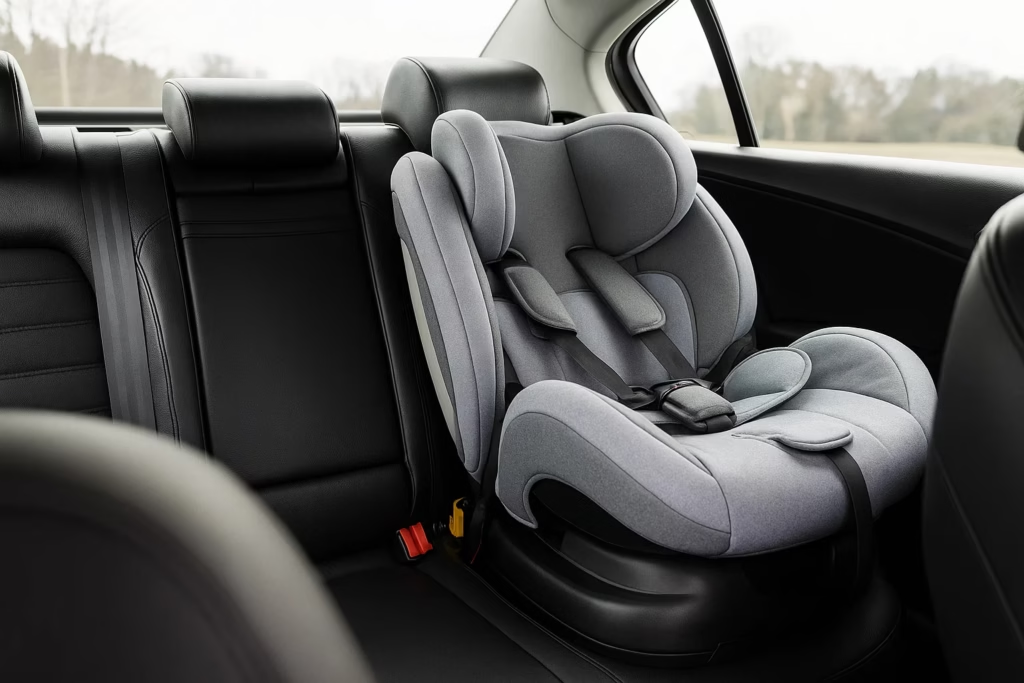
Choosing and Using Child Seat Restraints
o ensure you meet both legal requirements and maximize safety, here are tips:
Check the certification
Ensure the seat has either R129 (i-Size) or the older R44/04 type-approval (if still valid). After September 2024, only R129-approved seats can be sold as new in EU markets.Height vs. Weight
R129 uses height as the primary measure: easier to choose the correct seat based on how tall the child is.
For older seats (R44), weight groups are used (e.g. 0-13kg, 9-18kg, etc.).
Rear-facing when possible
For infants and toddlers: being rear-facing gives much better protection to head, neck, and spine. EU regulations require rear-facing until at least 15 months under i-Size. Mobility & Transport – Road Safety
Even beyond legal minimums, longer rear-facing is safer.
Correct Installation
Use ISOFIX if available—it’s safer and reduces the risk of incorrect installation.
Follow the manufacturer’s manual.
Check seat belt routing, tightness, angle, and that the seat is securely fixed.
Airbag safety
Never place a rear-facing child seat in front of an active airbag.
If the seat is front facing, deactivate airbag if required or move the seat to the rear.
Booster seats
Once child is too big for a harness seat, booster seats with back or without (depending on height and weight) might be used, ensuring they raise the child so the seat belt fits properly.
Latvia law requires a child restraint until 150 cm, so many children will need booster seats until that height.
Maintenance & Age
Check expiry dates, manufacturer recalls.
Replace after major accidents.
Child restraint laws in the EU and Latvia are designed to protect children by ensuring they use appropriate seats that meet strict safety standards. The major shift toward R129 / i-Size standards aims to simplify selection (by height), improve crash protection (especially side impacts), and reduce misuse.
For parents and drivers in Latvia:
Make sure your child seat has the correct certification.
Verify that it is correctly installed and suitable for your child’s height/weight.
Keep up with legal thresholds (especially the 150 cm / age 12 rule) to know when a booster or adult belt is acceptable.
Staying informed and compliant isn’t just about avoiding fines—it’s about real safety for children.
FAQs
01. Can I use an R44 seat bought before 2023/2024?
Yes, if it is still in good condition and was properly certified. Laws do not force you to replace existing, compliant R44 seats immediately. They regulate new sales.
02. What if my child is taller than 150 cm but young in age?
Once the child reaches 150 cm, they may use the adult seat belt rather than a child restraint (depending on the laws). Age alone is not always the deciding factor both height and/or age thresholds may apply.
03. Are taxis required to have child seats?
Generally no; the law requires the child to be restrained properly, but taxis are not always equipped. It may be necessary to bring your own.
04. What happens if I don’t obey the rules?
Legal penalties, fines, liability for injuries plus insurance implications in case of accidents. Also, safety risk is much higher for the child.
Discover more from SMOOTHSTEERING
Subscribe to get the latest posts sent to your email.