When driving on narrow roads or in tight spaces, knowing how to perform a three-point turn or U-turn safely is an essential skill. Both maneuvers help you change direction when there’s not enough space for a simple turn. However, they must be done carefully to avoid accidents or violating road rules.
What Is a Three-Point Turn?
A three-point turn (also known as a turn in the road) is used when the road is too narrow for a U-turn. It allows you to turn your vehicle around by making three distinct movements:
Forward across the road,
Reverse back in the opposite direction, and
Move forward again to complete the turn.
This technique is common during driving tests and in everyday driving situations where space is limited.
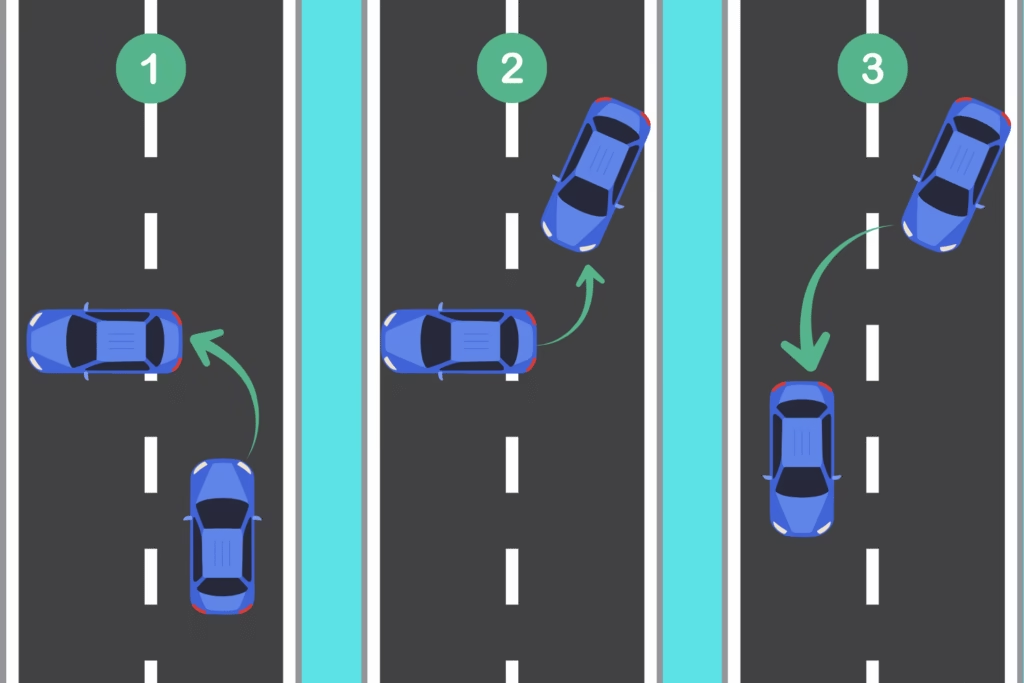
How to Perform a Three-Point Turn
Check traffic:
Look ahead and behind for oncoming vehicles. Ensure the road is clear in both directions.Signal right and pull over:
Indicate your intention and move close to the curb on the left (for right-hand driving countries).Turn the steering wheel fully:
Engage first gear (or Drive in an automatic) and steer sharply toward the opposite side of the road. Move slowly.Reverse with care:
Check mirrors and blind spots, then reverse while turning the wheel in the opposite direction.Move forward to complete the turn:
Straighten your steering and drive forward into your new direction.Final check:
Ensure your vehicle is aligned properly in the correct lane and the road is clear before accelerating.
What Is a U-Turn?
A U-turn is a single smooth maneuver used to turn the vehicle around on wider roads or designated U-turn spots. It’s quicker than a three-point turn but requires enough space and visibility.
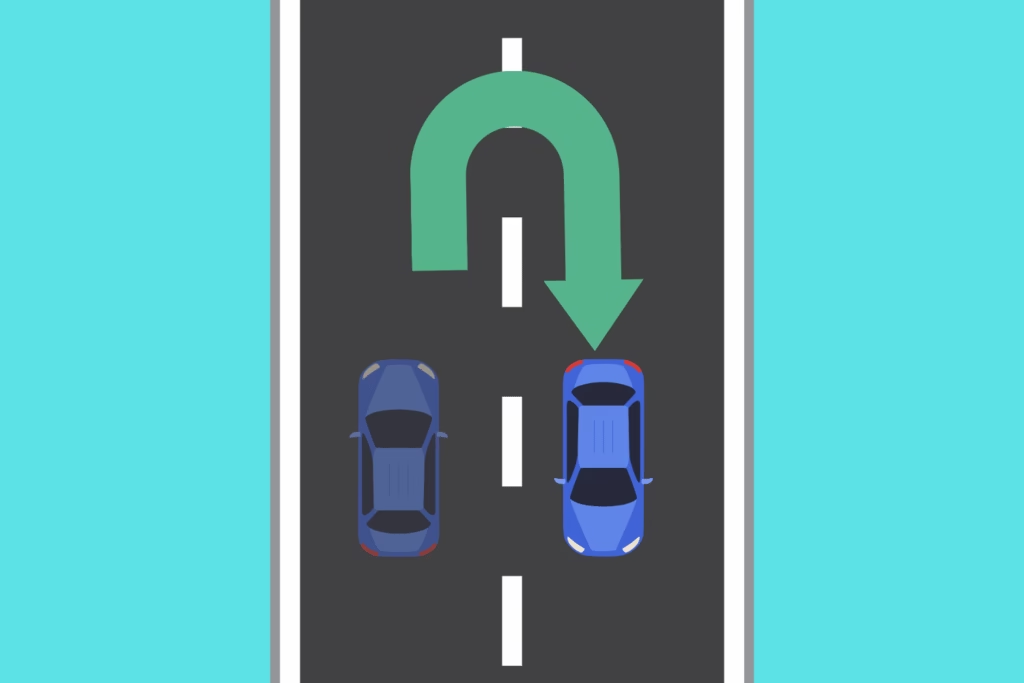
How to Perform a U-Turn Safely
Check signs and road markings:
Make sure U-turns are allowed at that location. Some roads prohibit them.Position your vehicle:
Move to the rightmost lane (or leftmost in left-hand driving countries).Signal your intention:
Use your indicator to alert other drivers.Check all directions:
Look for oncoming traffic, cyclists, and pedestrians.Turn smoothly:
Steer sharply but steadily, maintaining a low speed to stay in control.Merge safely:
Once you’ve turned, accelerate smoothly and merge with the traffic flow.
Safety Tips for Both Maneuvers
Always check mirrors and blind spots before and during the turn.
Avoid performing these maneuvers near bends, junctions, or on busy roads.
Be patient and wait for a clear gap before turning.
Use your indicators clearly to signal your intention early.
Stay calm and don’t rush the turn—control is more important than speed.
How to Handle Slopes and Hills
Turning on slopes or hills requires extra caution to prevent the car from rolling backward or losing control.
Engage the Handbrake: Always use the handbrake before starting a three-point turn or U-turn, especially on steep inclines.
Use the Correct Gear: In manual cars, use first gear uphill and reverse gear downhill. For automatic cars, keep the vehicle in ‘Park’ or brake mode until ready to move.
Check Surroundings: Always check mirrors and blind spots, including for pedestrians and cyclists, before maneuvering.
Wheel Positioning: Position wheels correctly against the curb when necessary to prevent rolling into traffic.
Practicing on gentle slopes first builds confidence and ensures safer turns on steeper hills. Staying calm and moving slowly also improves control and reduces stress during the maneuver.
Common Mistakes to Avoid
Turning without checking oncoming traffic.
Performing the turn in restricted or unsafe areas.
Forgetting to signal before or after the maneuver.
Steering too late or too early, causing the vehicle to mount the curb.
Whether it’s a three-point turn or a U-turn, mastering these maneuvers enhances your confidence and control behind the wheel. Always prioritize safety, awareness, and patience. With consistent practice, you’ll be able to perform both turns smoothly in any situation.
FAQ
Q1: When should I use a three-point turn vs a U-turn?
Use a three-point turn on narrow roads where a U-turn isn’t possible. Use a U-turn on wider roads or where traffic rules allow.
Q2: How do I check for safety before turning?
Always check mirrors, blind spots, and traffic from both directions. Signal early to alert other drivers.
Q3: Can I perform a U-turn anywhere?
No. Only where road signs and lane markings allow. Avoid U-turns near intersections, pedestrian crossings, or blind bends.
Q4: How can I make the turn smooth and safe?
Go slowly, control the steering carefully, and stop if needed to adjust. Practicing in a quiet area builds confidence.
Q5: What if the road is too narrow for a three-point turn?
Consider reversing into a driveway or side road safely, or find a wider area where a U-turn or three-point turn can be performed legally.
Q6: How do I signal correctly?
Always use your indicators to show your intentions before starting the turn and while changing direction during the maneuver.
Discover more from SMOOTHSTEERING
Subscribe to get the latest posts sent to your email.